
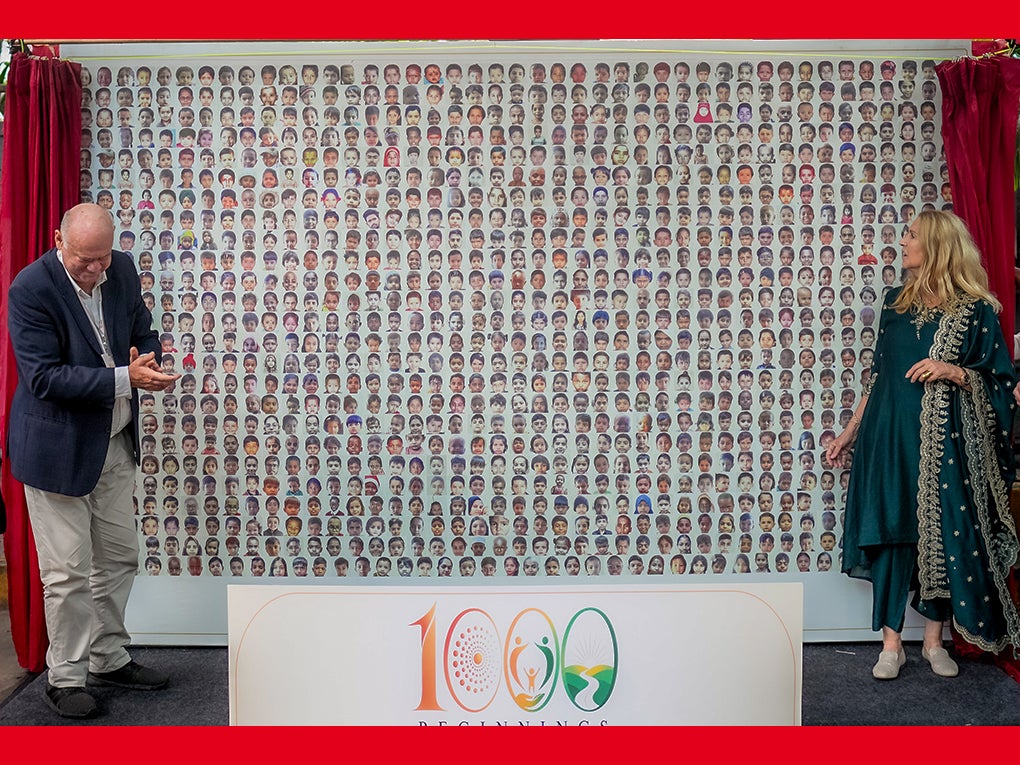
1,000 New Beginnings: DKMS and Sankalp Celebrate 1,000 Paediatric Stem Cell Transplants in India
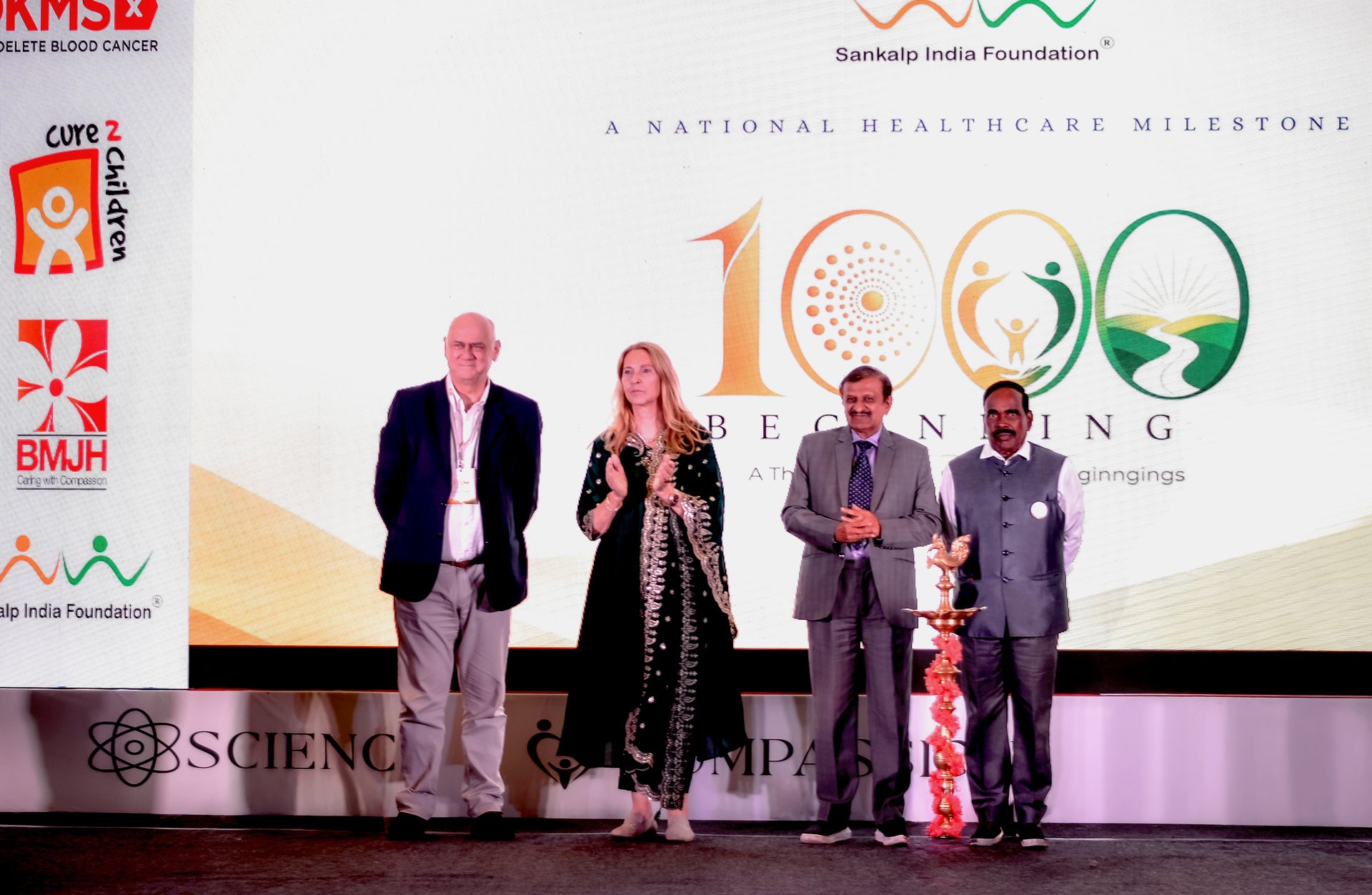
Bengaluru, India — 4 September 2026 — One thousand children, one thousand families and one thousand new beginnings: Sankalp India Foundation has reached the milestone of 1,000 paediatric stem cell transplantations, giving children with severe inherited blood disorders such as thalassemia the prospect of a healthy life beyond regular blood transfusions and lifelong treatment. The milestone will be celebrated in Bengaluru on 5 September under the theme “1,000 Beginnings”. It also marks an important achievement in the more than ten-year partnership between Sankalp India Foundation and the international nonprofit organisation DKMS, together with medical and knowledge partner Cure2Children Foundation.
Of the 1,000 transplants carried out through Sankalp, DKMS has contributed to the transplantation costs of more than 820 children. Over the years, the collaboration has grown far beyond financial support for individual transplantations. Today, it spans thalassemia care, transplantation infrastructure and diagnostics, specialist training and clinical research.
“One thousand transplants show what long-term partnerships can achieve. Sankalp brings extraordinary local expertise and commitment, Cure2Children contributes vital medical knowledge, and together we can help turn access to cure into a reality for more children. This is exactly the kind of sustainable collaboration we want to build: in the country, for the country,” says Dr. Elke Neujahr, Global CEO of DKMS.
More than ten years of growing impact
Sankalp began its first paediatric bone marrow transplantation programme in Bengaluru in 2015 in partnership with Cure2Children. In the same year, the collaboration with DKMS started with free HLA typing and has since developed across the treatment pathway. DKMS supports HLA typing for patients and their families, thalassemia management and transplantation costs, and has invested in specialised paediatric BMT capacity and molecular diagnostics in Bengaluru and Ahmedabad. The partners also collaborate on specialist training for nurses and, since 2025, on clinical research.
“For us, these 1,000 transplants are 1,000 beginnings and proof that cure can be made accessible when organisations combine their strengths with a shared purpose,” says Rajat Kumar Agarwal, President of Sankalp India Foundation. “Far more than numbers, this milestone validates our approach, showing that centres in resource-constrained settings can achieve world-class outcomes and internationally recognised quality while keeping transplantation affordable and accessible. Partnerships such as those with DKMS and Cure2Children are essential to this joint effort.”
Today, Sankalp cares for more than 3,000 children through 30 comprehensive thalassemia day-care centres and operates two paediatric BMT centres in Bengaluru and Ahmedabad. Its prevention network comprises 87 centres across 81 districts, and more than 220,000 couples have been screened.

International recognition for quality of care
Another important milestone demonstrates how the partnership has evolved from expanding access to systematically strengthening quality: the BMJH-Sankalp Centre for Pediatric Hematology Oncology and BMT in Bengaluru is the first programme in India to have achieved JACIE accreditation.
JACIE accreditation is internationally recognised in hematopoietic stem cell transplantation and cellular therapy and demonstrates compliance with rigorous standards across clinical care, stem cell collection and processing, quality management and patient safety. The accreditation underlines that internationally benchmarked transplantation quality can be delivered sustainably in India and that excellent outcomes do not always require increasingly expensive or complex models of care.
One of 1,000 beginnings: Shaheem's story
Behind every transplantation is a child and a family. Muhammad Shaheem, from Karnataka, was diagnosed with severe thalassemia at just five months old. Years of regular transfusions eventually led to severe iron overload affecting his heart and liver, making transplantation particularly high risk. His younger sister Zara was identified as a full HLA-matched donor, and after intensive preparation and counselling at the Sankalp-BMJH Centre in Bengaluru, his family decided to proceed with the transplantation.
Shaheem's mother, Zareena, knows the burden of the disease herself as she lives with thalassemia major and continues to require regular treatment and blood transfusions. “As a mother, I wanted my son to have the chance of a life that is not determined by thalassemia. We were afraid, but the team gave us the confidence to move forward. Seeing Shaheem today makes that decision worth everything.”
The 1,000-transplant milestone represents both what the partnership has already achieved and its ambition for the future: enabling more children to reach curative treatment while strengthening the structures needed to provide high-quality care sustainably. For Sankalp, it is another major step towards its vision of a thalassemia- and hemoglobinopathies-free India by 2047.
For any further details, please contact:
Neelam Kachhap | DKMS Foundation India | 9958944181 | mneelam.kachhap@dkms-asia.com
Ritu Verma | DKMS Foundation India | 6364857919 | ritu.verma@dkms-asia.com
About DKMS
DKMS is an international nonprofit organization dedicated to saving the lives of patients with blood cancer and blood disorders. It was founded in Germany in 1991 by Dr. Peter Harf and has since worked to ensure that more and more patients receive a lifesaving stem cell donation. More than 13.5 million potential donors are registered with DKMS, and to date, the organization has facilitated more than 135,000 blood stem cell donations. In addition to Germany, DKMS is active in the U.S., Poland, the U.K., Chile, India, and South Africa. Through international projects and support programs, DKMS provides even more people worldwide with access to lifesaving therapy. In addition, DKMS is committed to advancing medicine, science, and research to improve patients’ chances of recovery. In its state-of-the-art laboratory, the DKMS Life Science Lab, the organization sets global standards in the typing of potential stem cell donors to find the perfect match for a transplant.